- Design System Diaries
- Posts
- My 2026 predictions for Designers and Design Systems
My 2026 predictions for Designers and Design Systems
Figma isn't dying, AI won't save you, and creativity is back. Here's what 2026 really holds for designers and design systems

Lewis Healey
January 02, 2026 • Reading time: 10 minutes
This year is going to be a big year, can you feel it? I'm not talking about the final season of The Boys or GTA 6. I'm talking about design and what it means to deliver experiences to customers. 2025 has been exhausting to say the least but I’m hopeful for 2026, I can feel the optimism in the air.
I also did a bunch of predictions for 2025 last year. If you’re interested, check them out and let me know what you think came true.
P.S I’m back and writing, expect monthly musings 🙂
Lewis x
🔑 Key takeaways
Figma isn't going anywhere
Creative renaissance incoming (taste becomes the differentiator)
Internal tooling explosion as AI lowers barriers
Design Systems must support everyone, not just designers and engineers
AI ROI expectations from leadership won't match reality (yet)
Predictions
1. Figma will not die
If you've been on LinkedIn lately, your feed is likely filled with posts about how AI is replacing Figma. It's true, Figma is moving from a throughput to an input, but they'll adapt and they're not disappearing in 2026.
Here's why: the visual canvas isn't obsolete, it needs to evolve. AI agents can generate fancy interactions through prompts, sure. But when you want to tweak a specific element's styling or a design system component prop, prompting becomes tedious. I've watched colleagues get genuinely frustrated trying to make simple changes through natural language - things that would take seconds with direct manipulation in Figma. People still need that sense of control and visual feedback, especially in a code-first world. Figma has the best canvas around, and that's not going away. They need to evolve to support code in canvas, because tools like Cursor are coming for the designer persona.
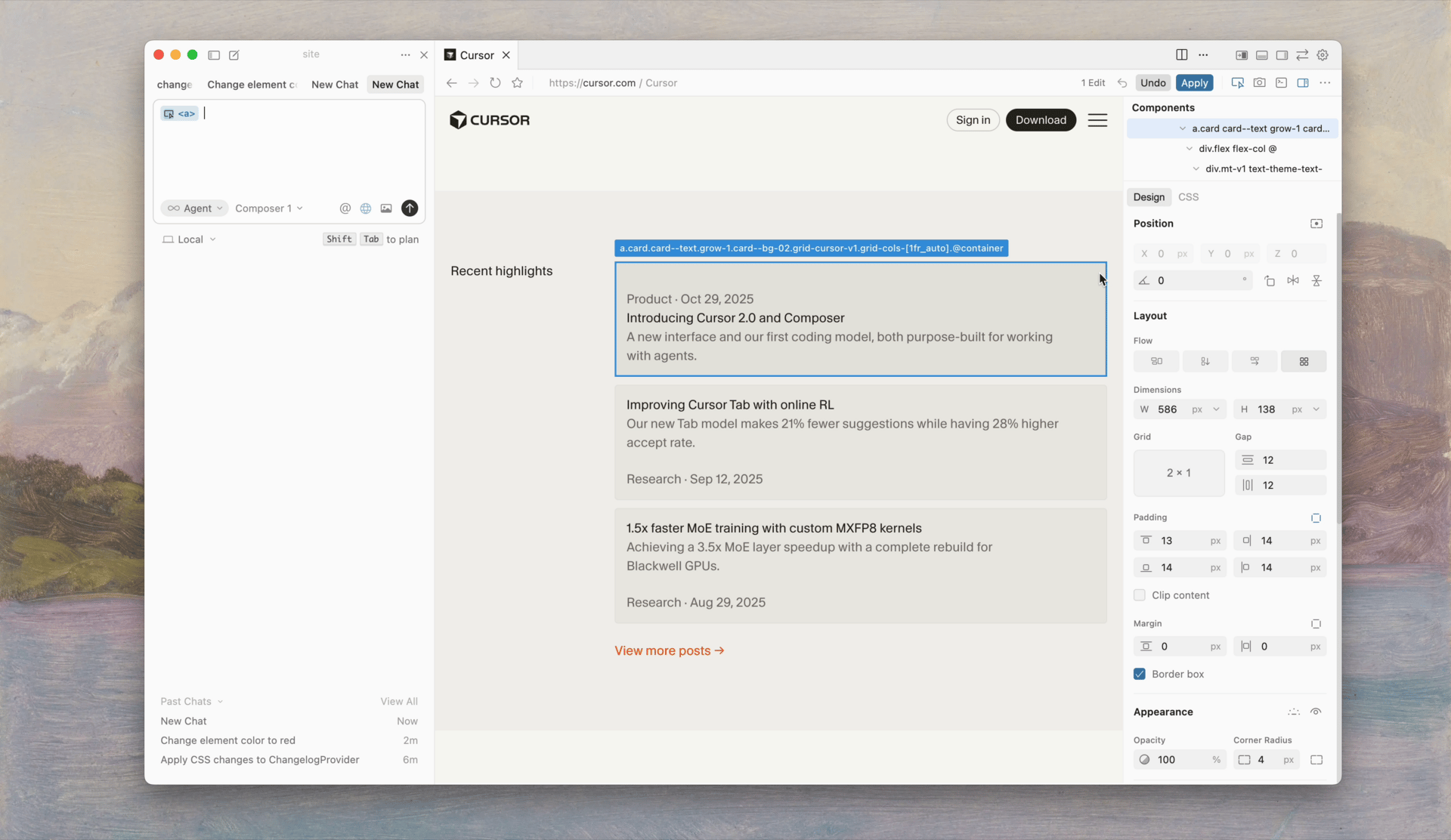
Cursor’s visual editor
Now Figma’s IPO is out and potential daddy Adobe money is in the rearview, Figma has clear air to push features. They're well-positioned to render code in the design canvas or bring Make-style functionality into Design mode - this would solve the visual canvas user need AND allow Figma to keep up with the cool kids. Will it work for everyone? Not sure, but don't count them out, and don't listen to the LinkedIn lore.

Count how many you see on your feed today
👉 What you can do today:
If you give Figma enough money to have an account manager, tell them you want to render code in the canvas. If not, feel free to message them on social media
Experiment with code-first design tools while maintaining Figma expertise (Onlook, Dessn, Framer, Opacity, Penpot, Knapsack) - as they may be a tool of the future
2. We'll enter a creative renaissance
This is already happening: design is being celebrated more. Taste is the differentiator when anyone can ship code, and that's exciting. Things like motion and delight are no longer descoped work, anyone can add finesse now.
I'm thrilled we're moving away from the neutral/flat era toward adaptive, experimental, and creative experiences (but still accessible and usable - cough, Liquid Glass). Bring back the Space Jam era of the web where people were free to create whatever they want. The signals are already there, see F1 World Champion Lando Norris’ personal website, it caused quite the buzz with its combination of creativity and storytelling.
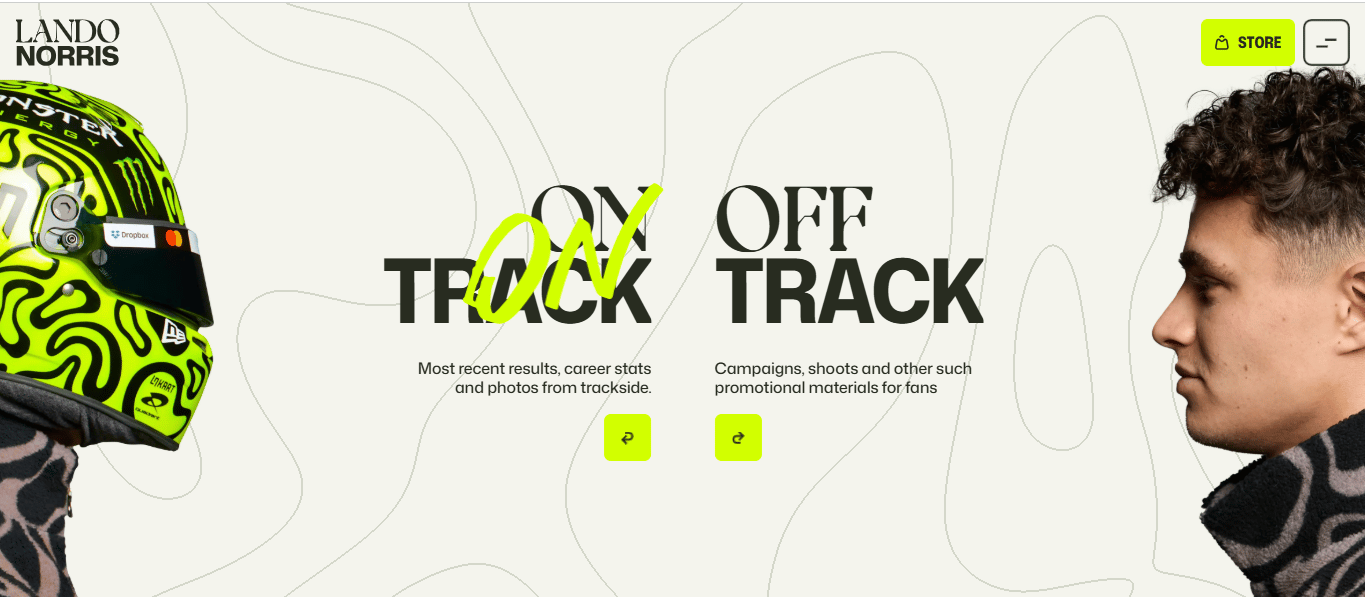
2025 F1 Champion Lando Norris website
For Design Systems, this means embracing expressive components and flexible foundations that encourage creativity rather than stifle it. The best systems will provide guardrails, not cages. Design Systems are more important than ever, but they need to focus on both working for and with humans and machines.
👉 What you can do today:
Audit your system for "creativity killers", overly rigid components - and fight to fix them in your 2026 roadmap
Invest in motion primitives and animation tokens if you haven’t already
Document when to break the rules, not just how to follow them and integrate that into your AI as instructional markdown files wherever you generate UI
3. Internal tooling on the rise
With agent creators in Replit, Claude, and OpenAI, we're seeing an explosion of bespoke internal tools. Whether it's dashboards, games, or even agents, these make our lives better and augment our work. As more people get familiar with the tools, we'll see a dramatic increase in super-niche internal tools.
Examples we've created at Atlassian:
Radius migration plugin (automated component updates across thousands of files)
Enablement Slack bot in Replit (micro survey push and inactive user engagement)
Pretty code formatter (for slides)
Experimentation playgrounds (testing new tokens, values and combos)

A code image generator or presentations (built in Replit)
The beauty? They're built by practitioners, for practitioners, and shipped in days, not quarters.
👉 What you can do today:
Identify tedious, repetitive tasks in your workflow to solve with AI
Experiment with building custom plugins or agents to automate them
Create a "hack day" culture where team members can build tools they wish existed
4. The design system remit will evolve
The software delivery lifecycle is becoming agentic. Humans will do more, faster, through AI orchestration. There's a new cohort of people that want to create coded things in organizations: designers, PMs, or even non-product-facing people. The barrier to building is now incredibly low.
This poses a challenge for design systems. Your remit has gone from design + engineering to everyone and anyone. If Bob from Finance can spin up a dashboard using AI, he's technically using (or bypassing) your system.
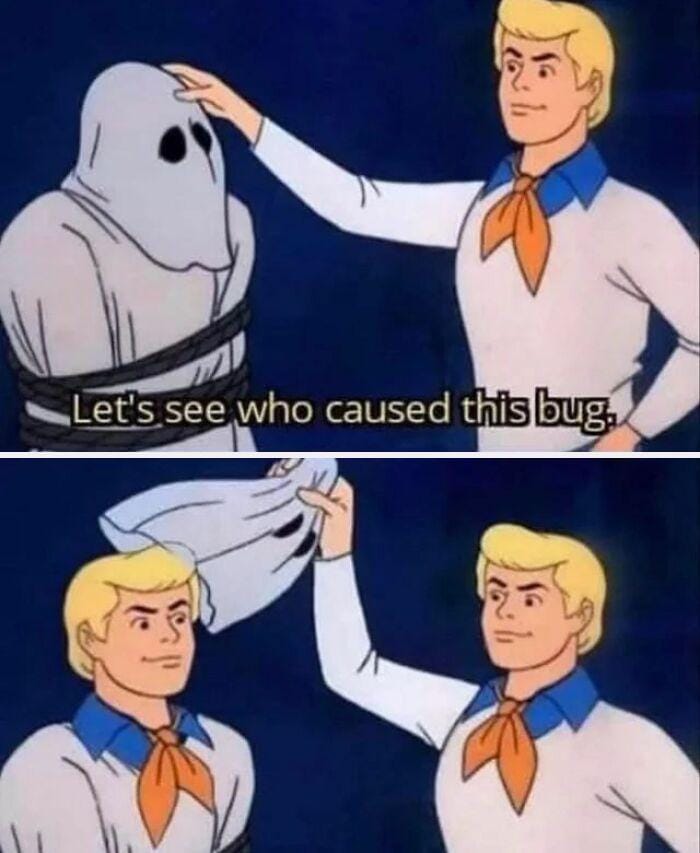
With great power comes great responsibility
What this means:
You need better guardrails that work with AI tools
Components must be more discoverable for non-technical users
Documentation needs to be AI-readable and human-friendly
Governance changes when your creator pool expands 10x
The teams that support this new wave of creators (without sacrificing quality) will win.
👉 What you can do today:
Make documentation LLM-friendly (structured, semantic, clear examples)
Create "easy mode" components or templates for non-technical users
Establish guidelines on when to go off-system vs. loop in the core team
5. AI won't have as much ROI as you think
Here's the uncomfortable truth: there's a disconnect between what leadership expects and the realm of possibility. I'm seeing pressure to "integrate AI everywhere" but large enterprises have constraints smaller companies don't. Security approvals, governance reviews, monorepos, technical debt - all of this slows down the velocity leadership is hoping for.
Why the ROI might disappoint:
⛔️ Security and compliance: AI tools need your codebase access to be useful, but that creates risk and many companies may not hand over the keys to a 3rd party. Many organizations will spend 2026 figuring out governance rather than shipping features.)
💸 Technical debt is still technical debt: AI generates code quickly, but if your codebase is messy, AI will just generate mess faster. The productivity gains assume clean foundations.
🤷🏻♂️ Uneven AI adoption: Not everyone adopts at the same pace. Some become power users, others resist. That means you won't see the 10x gains leadership hopes for.
👩🏽⚖️ AI needs human judgment: AI can create 70-80% of a component/experience quickly, but that last 20% of accessibility, edge cases, and brand alignment still requires expert review.
What success looks like
The wins in 2026 will be incremental: faster prototyping, better documentation generation, more efficient code reviews, improved consistency checks. The teams that set realistic expectations and focus on specific, high-value use cases will see better results.
👉 What you can do today:
Set realistic expectations with leadership about capabilities and limitations
Start with narrow, high-value use cases rather than AI-ifying everything
Track actual time savings, not just adoption numbers
Focus on AI as augmentation, not replacement
Final thoughts
Looking ahead to 2026, I'm optimistic but realistic. The tools are getting better, creativity is coming back, and possibilities are expanding. But the fundamentals haven't changed—they've just gotten more important.
The teams that will thrive: embrace new tools while maintaining quality, support creativity within guardrails, build for everyone not just core product teams, and stay grounded in user needs while exploring new possibilities.
One final thing…
I'm rebranding! 🎉 My job has evolved, and so has my thinking. I'd like to expand content beyond Design Systems to include AI and career growth. This newsletter will still be 80% systems, but I'll sprinkle in topics to help you navigate this industry sea change.
Your next newsletter will still come from “Lewis Healey” as its still my thoughts, but the branding will be 'System x Human x Machine’ - the venn diagram of the future where the human will be in the centre of this monumental shift.
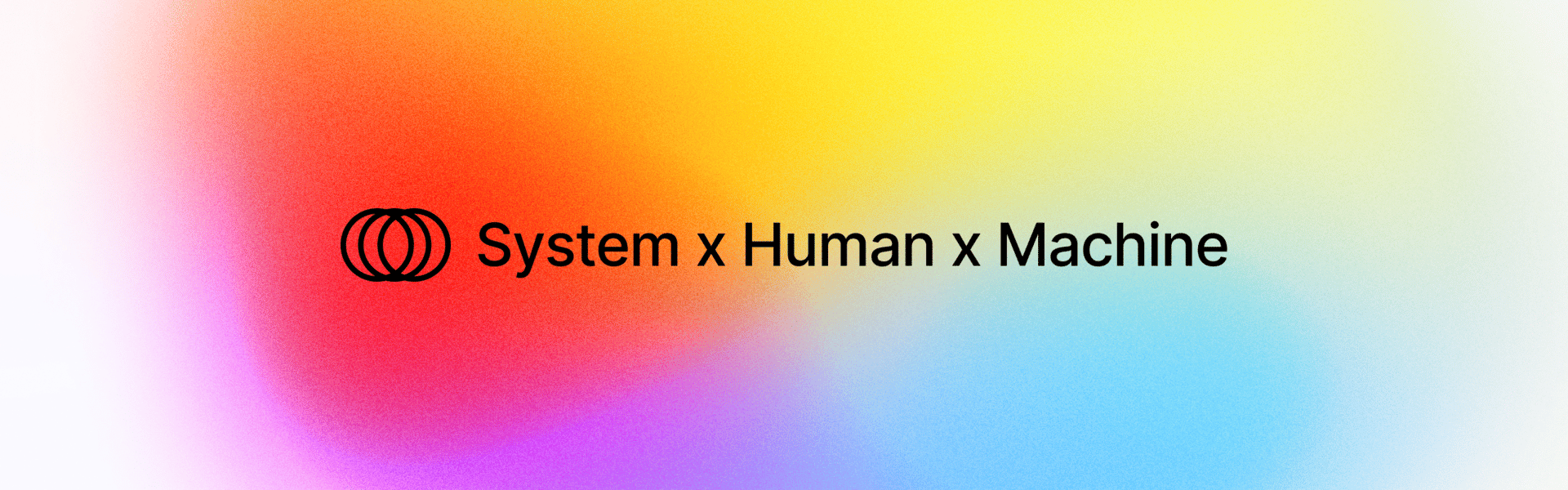
My new brand inspired by the colourful future I see for humans
🤙 Any feedback is much appreciated
What do you think? Which prediction resonates most? Let me know in the comments on the web version.
Reply